Wild n Chill Coldwater Crossing Guide
Learn the Demo’s first region — tools, shelter, trails, and locals worth meeting.
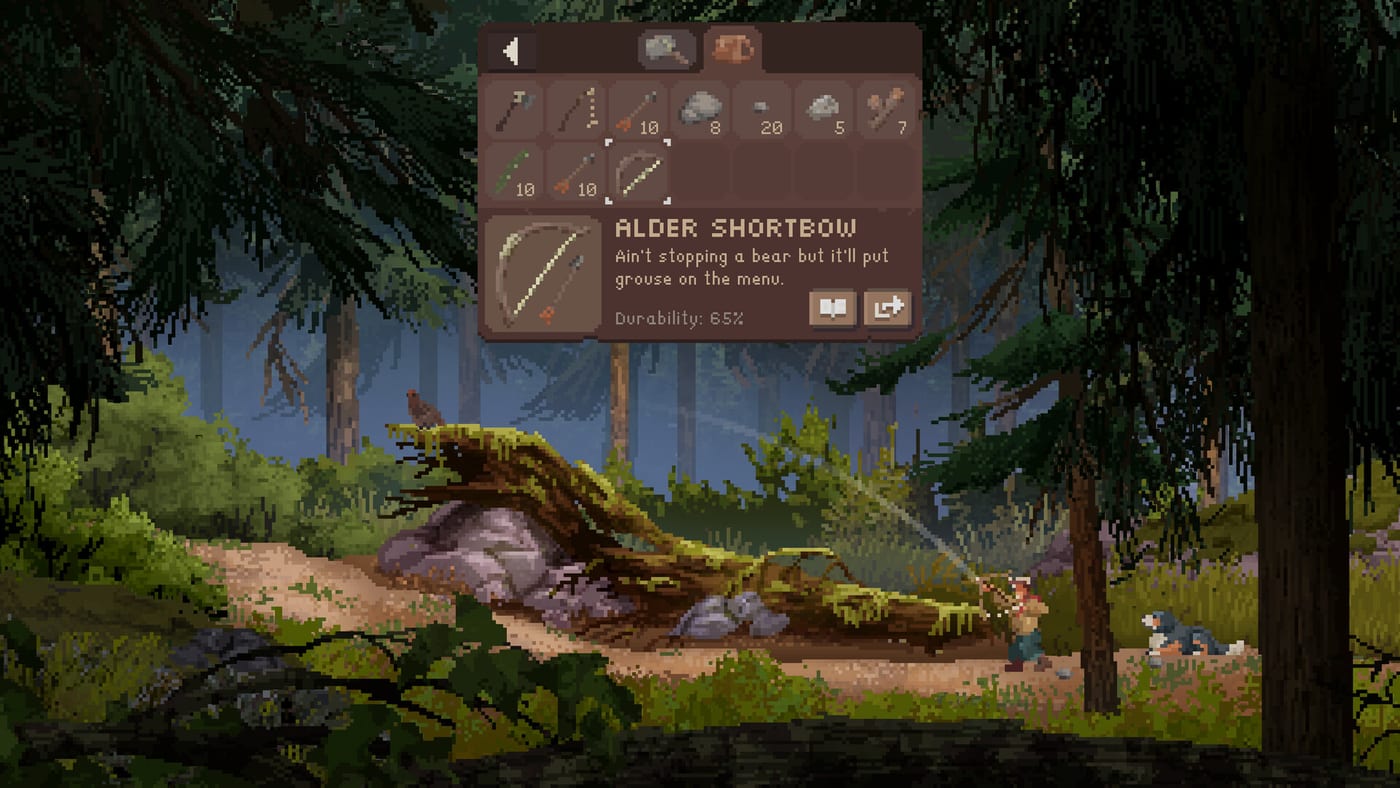
Coldwater Crossing is where Wild n Chill teaches you to live outdoors without turning the fantasy into a panic sim. It is the first region and the focus of the Steam Demo, which went live August 6, 2026. Wombat Brawler frames the Demo as a guided introduction: craft simple tools, build a survival shelter, forage, hunt, and meet locals — including a friendly old hermit named Buck who might trade if you bring something worth offering. The full game is TBA; eleven regions are planned beyond this classroom valley.
Boot-camp context lives on Getting Started and the Demo Guide. This page is your map-shaped field manual.
What Coldwater Crossing is for
Use the region to install habits:
- Bushcraft ladder — knife → rope → axe → campfire → shelter → bow on Tools Progression
- Needs discipline — food, water, energy loops on Survival Needs
- Resource literacy — forage routes on Foraging, timber sense for fire and frames
- Wildlife respect — journal curiosity on Animals Journal, calm protein on Fishing, bear sense on Bears and Danger
- Social beats — Hermit Buck trades on Trading with Buck, co-op chores up to four players
- Companion play — dog warns and retrieves on Dog Companion
If a hike does not serve one of those lessons, it is sightseeing. Sightseeing is allowed; just leave energy for the walk home.
Landmark thinking (without fake GPS pins)
Official maps may not hand you a tourist brochure. Build your own mental pins:
- Home fire — the first reliable campfire and shelter cluster
- Fiber line — a short loop that renews rope materials
- Timber belt — axe work without vanishing into dense bear cover
- Water bank — fishing fallback when land trails argue
- Trade path — the route you take when Buck might help
- Abort ridge — a known open-ish return if a plan fails
Name these out loud in co-op. Shared/Split Screen and Remote Play Together make ambiguous “over there” into comedy; comedy is optional.
Route templates for a chill day
Morning setup: Check needs, gather fiber/stone near home, advance the missing tool rung, keep firewood honest.
Midday protein: Either a short hunt with bow readiness or a bank session from Fishing. Cook before you invent a second objective.
Afternoon build: Shelter improvements or recipe work from Recipes. Stop before dusk turns every trail into guesswork.
Evening account: Tidy food, dry wood, journal notes, dog care. Plan tomorrow’s single focus.
Cross-link cabin ambition to Cabin Building only after survival shelter stops leaking on your mood.
Danger geography
Dense woods can hold black bears that are not keen on sharing. Skirt thickets when hauling meat. Do not craft in brush tunnels. Listen to the dog. Keep Bears and Danger as required reading before greed tours. Wolves-outta-camp thinking still informs how you store food even when a session feels peaceful.
Buck and the human map
Meeting Buck is a Demo highlight. He is a landmark as much as a vendor. Prepare trades with intention — spare materials that do not gut your knife-to-shelter plan. A good trade can replace a dangerous gather; a bad trade is just losing fiber with extra dialogue.
Co-op on the crossing
Online co-op supports up to four. Assign roles mapped to geography: one player owns home fire, one runs fiber/timber, one handles hunt or fish, one scouts with abort authority. When someone places a window backwards, that is a build-boss problem, not a map problem — but the map still needs a single agreed camp coordinate.
How Coldwater connects to the eleven-region plan
Mastering this region is how you prepare for the rest. Regions Overview explains the roadmap without inventing unannounced biome names. 40+ animals and 20+ fish are wider targets; Coldwater is where you learn to meet wildlife without emptying your needs bar.
Session checklist
- Home fire and shelter identified
- Next tool rung known before exploring
- One forage loop and one protein plan selected
- Bear rules reviewed for any dense-wood objective
- Buck trade considered only if mats allow
- Co-op landmarks named
- Controls comfortable for travel; Tools ready for notes
- Return path to Map hub and Guides if you need broader pacing
Coldwater Crossing is enough world for a cozy Demo education. Learn it well, keep the fire dry, and let the full wilderness arrive when Wombat Brawler opens the next gates.
Frequently Asked Questions
Quick answers to the most common questions.
Is Coldwater Crossing the full game map?
No. It is the first region and the Demo focus. Eleven regions are planned for the full game, which is TBA.
What should I do first in Coldwater Crossing?
Follow bushcraft essentials: simple tools, campfire, survival shelter, forage and hunt loops, then meet locals like Hermit Buck.
Where do black bears show up?
Treat dense woods as bear country. Plan exits, keep the dog close, and read the Bears and Danger guide before long timber hikes.
Can I play Coldwater Crossing in co-op?
Yes. Online co-op supports up to four players — share landmarks and split camp, gather, and protein roles.
Who is Hermit Buck?
A friendly old hermit local in the Demo who may trade if you bring something worth offering. See Trading with Buck for preparation tips.